- Blog
- How to Import a Car to Austria
How to Import a Car to Austria
From CoC documents to NoVA and registration, here’s what car dealers should know before importing used vehicles to Austria.
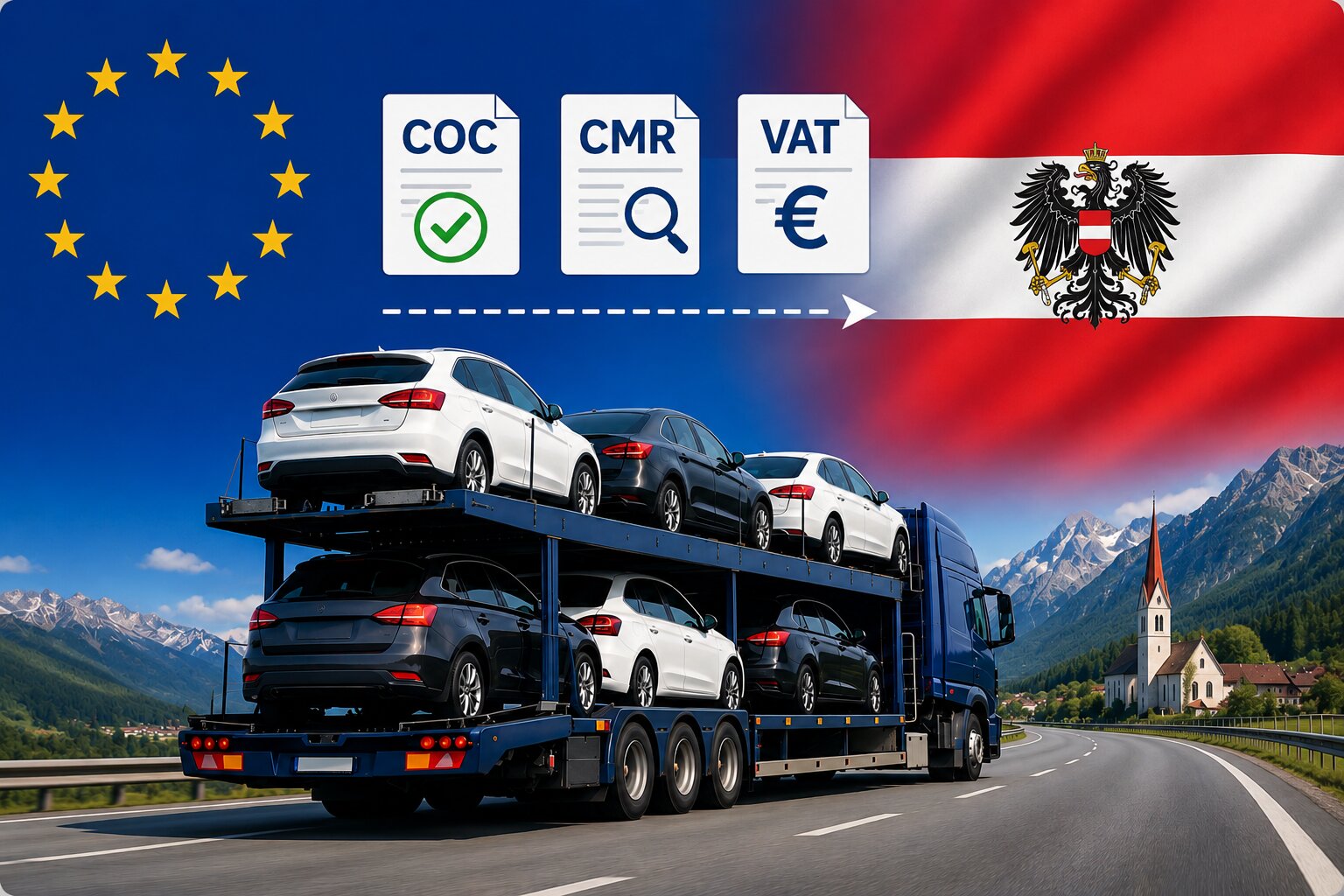
Whether you’re looking for a wider choice of vehicles to import or more profitable deals, importing used cars from abroad could be a good step for your dealership.
But to make imports efficient, you need a clear view of the process, the costs, and the local rules.
Let’s get familiar with the main steps so you can start importing and reselling cars sooner.
Documentation for importing a vehicle to Austria as a business
Here’s a list of documents you’ll need before and during the import process.
Vehicle purchase invoice
Your purchase invoice is the primary proof that your business legally purchased the vehicle.
It usually shows the seller and buyer details, vehicle information, the VIN, the purchase price, and the VAT treatment.
The purchase price should be clear because the NoVA tax is calculated based on the amount shown on the invoice.
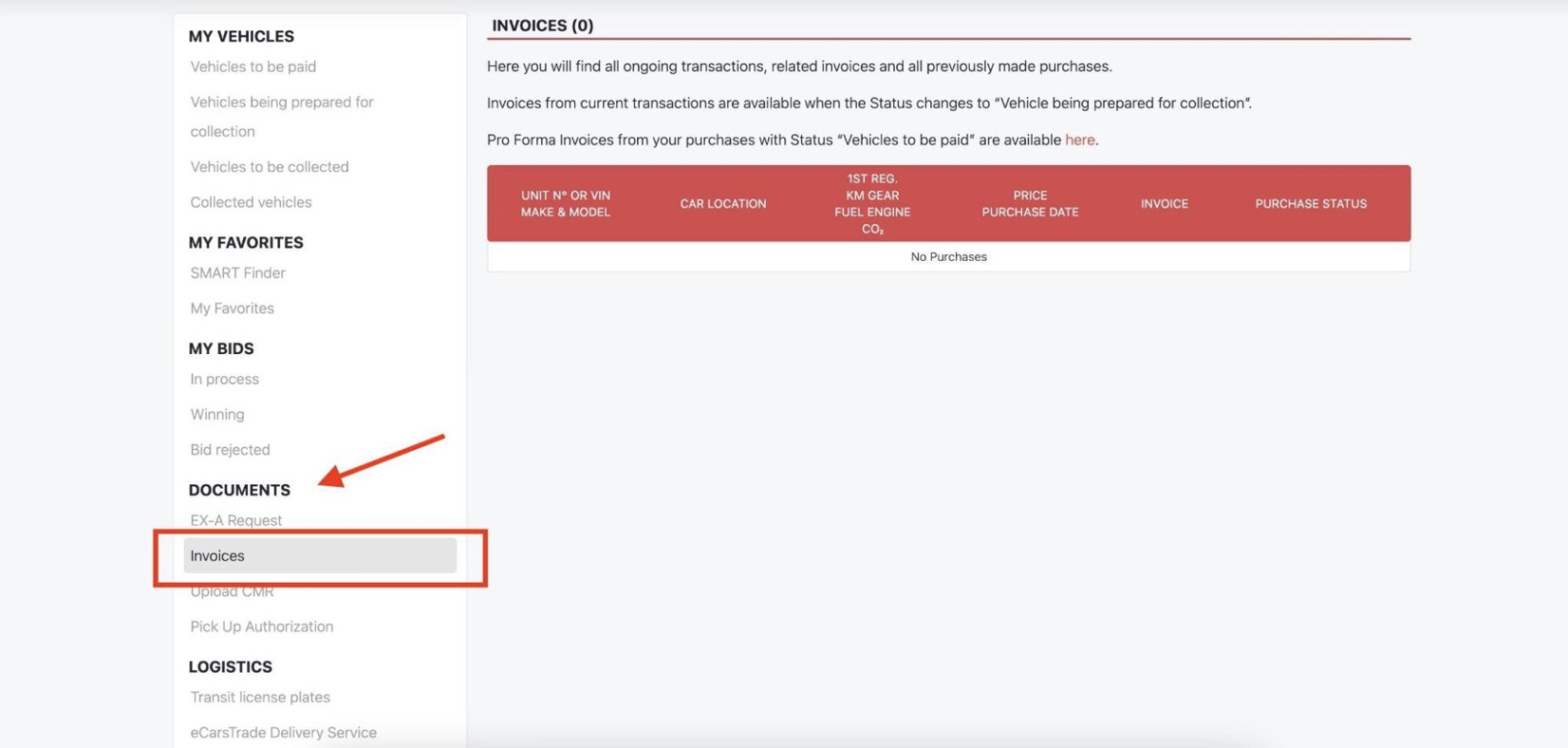
If you buy through eCarsTrade, you’ll be able to access the invoice from your Personal Page after the purchase is complete.
Foreign registration papers
You’ll also need the vehicle’s original registration documents from the country where it was registered before it was imported.
These papers confirm which vehicle you’re importing and show its previous registration details.
When you buy on eCarsTrade, the original registration documents are provided with the vehicle, so this part of the paperwork is easier to prepare.
Certificate of Conformity (CoC) / Individual approval
The Certificate of Conformity, or COC, is a document proving that the vehicle meets EU technical and environmental standards.
In Austria, you’ll usually need the CoC to record the car in the approval database. This applies to vehicles imported from other EU members.
If you’re importing from outside of the EU, and the car was never issued a CoC, you’ll need to apply for individual approval (Einzelgenehmigung) instead.
Used cars are frequently sold without the CoC.
In that case, you can purchase a certificate from a provider like EUROCOC or COCEurope.
Proof of business registration and VAT number
Since you’re importing as a car trader, you’ll have to prepare your company documents and VAT number.
If someone else is handling the import for your business, make sure they also have the right authorization.
Taxes when importing a car to Austria
Before you buy a car for import, you should first consider all the taxes you’ll have to pay.
VAT
When you buy a used car from another EU country, the VAT treatment depends on the seller's VAT scheme.
There are two options:
- The standard VAT scheme
- The margin scheme
On eCarsTrade, all listings clearly state which scheme is used.
If the car is sold under the standard VAT scheme and both the seller and the buyer are VAT-registered businesses, they’ll usually sell the car without foreign VAT.
You then handle the VAT in Austria as an intra-EU acquisition.
On eCarsTrade, these vehicles are marked as VAT-deductible.
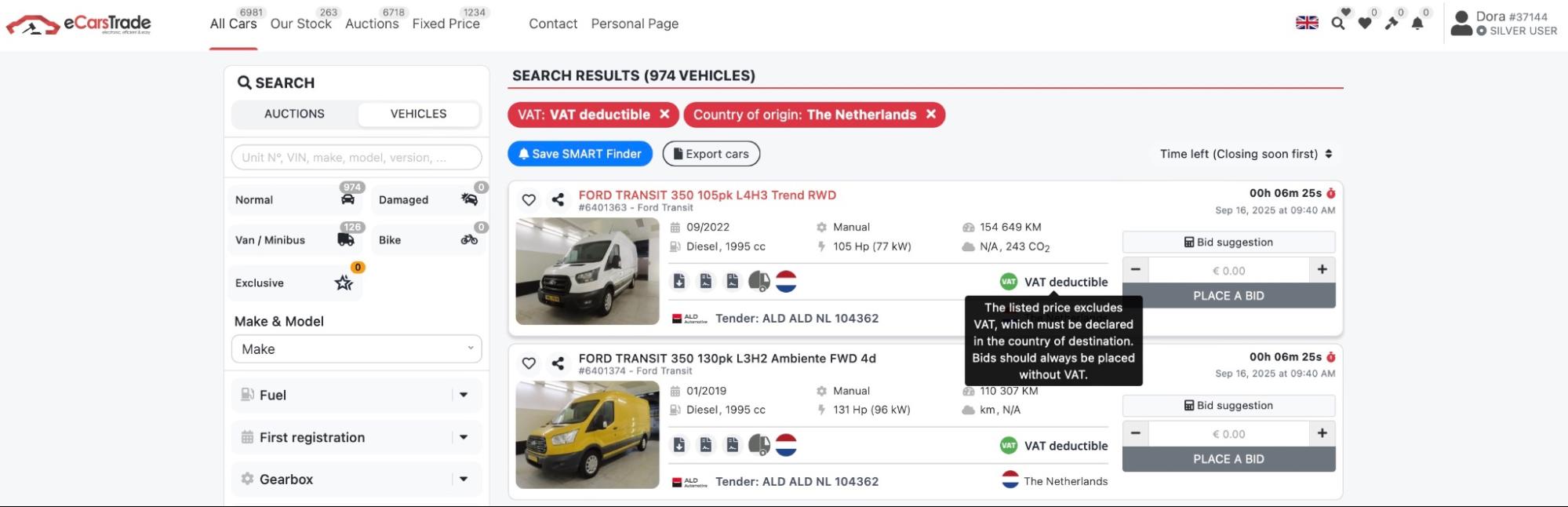
Some cars are sold under the margin scheme.
Their price already includes VAT, but the VAT amount isn’t listed separately on the invoice, so you can’t deduct it later.
On eCarsTrade, these cars are marked as “Margin - VAT not deductible”.
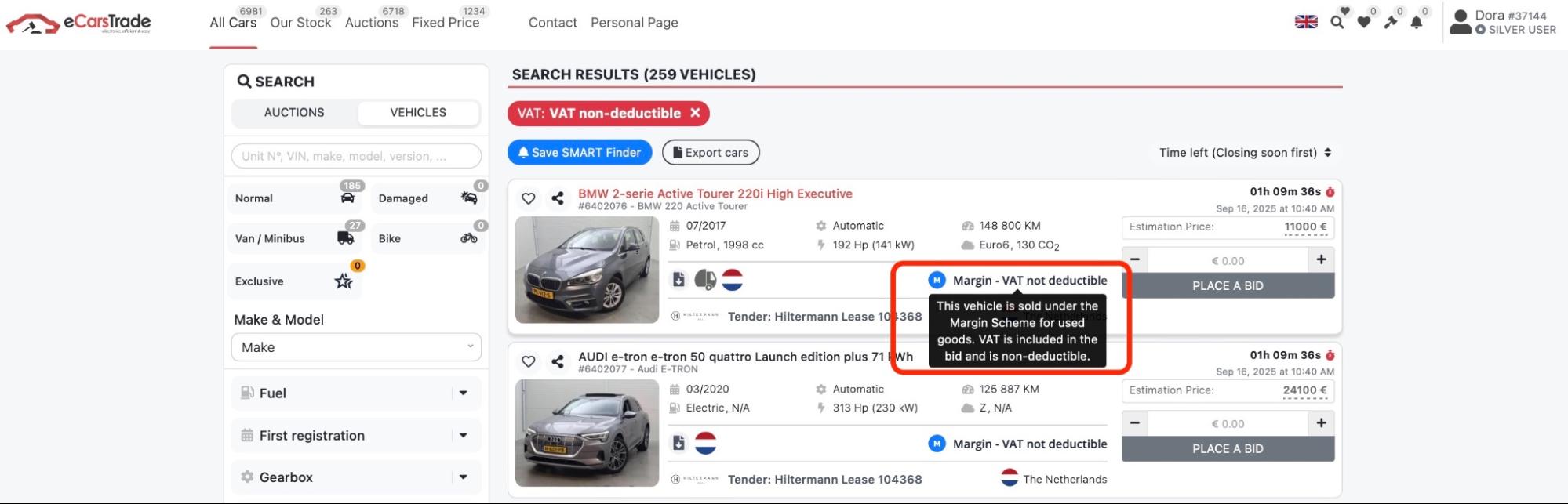
You should always check which VAT scheme applies before buying a car!
Customs duty
If you import a car from another EU country to Austria, customs duties won’t apply.
In case you import a car into Austria from outside the EU, you’ll likely have to pay the customs duty, which is 10% of the vehicle’s customs value.
NoVA
Austria has a specific tax that you’ll have to consider.
This is the Standardized Consumption Tax, often called NoVA (Normverbrauchsabgabe).
The NoVA is paid once, when registering the vehicle.
NoVA is generally calculated from the vehicle’s value and CO₂ emissions.
A fixed deduction is then applied, while cars with higher emissions may get an extra CO₂ charge.
Keep in mind that NoVA varies greatly based on emissions.
For instance, for a 2018 diesel car with 106 g/km of CO₂, and priced at €10,000, the NoVA tax would be around €250-€300.
A newer petrol or hybrid model with lower emissions would have lower NoVA.
Full EVs are exempt from NoVA because they don’t produce CO₂ emissions.
To check a specific car, use a NoVA calculator before you buy.
Enter the vehicle price, first registration date, fuel type, and CO₂ value, and you’ll get a useful estimate for your import budget.
Step-by-step process - from purchasing a car to importing it to Austria
Now let’s see the entire import process, so you know where and how you’ll encounter the documents and taxes you just saw.
1. Research and buy the car
Start by identifying what sells well in Austria. On eCarsTrade, you can browse thousands of cars on one platform.
You can use filters to narrow down your selection by make, model, price, mileage, fuel type, and more.
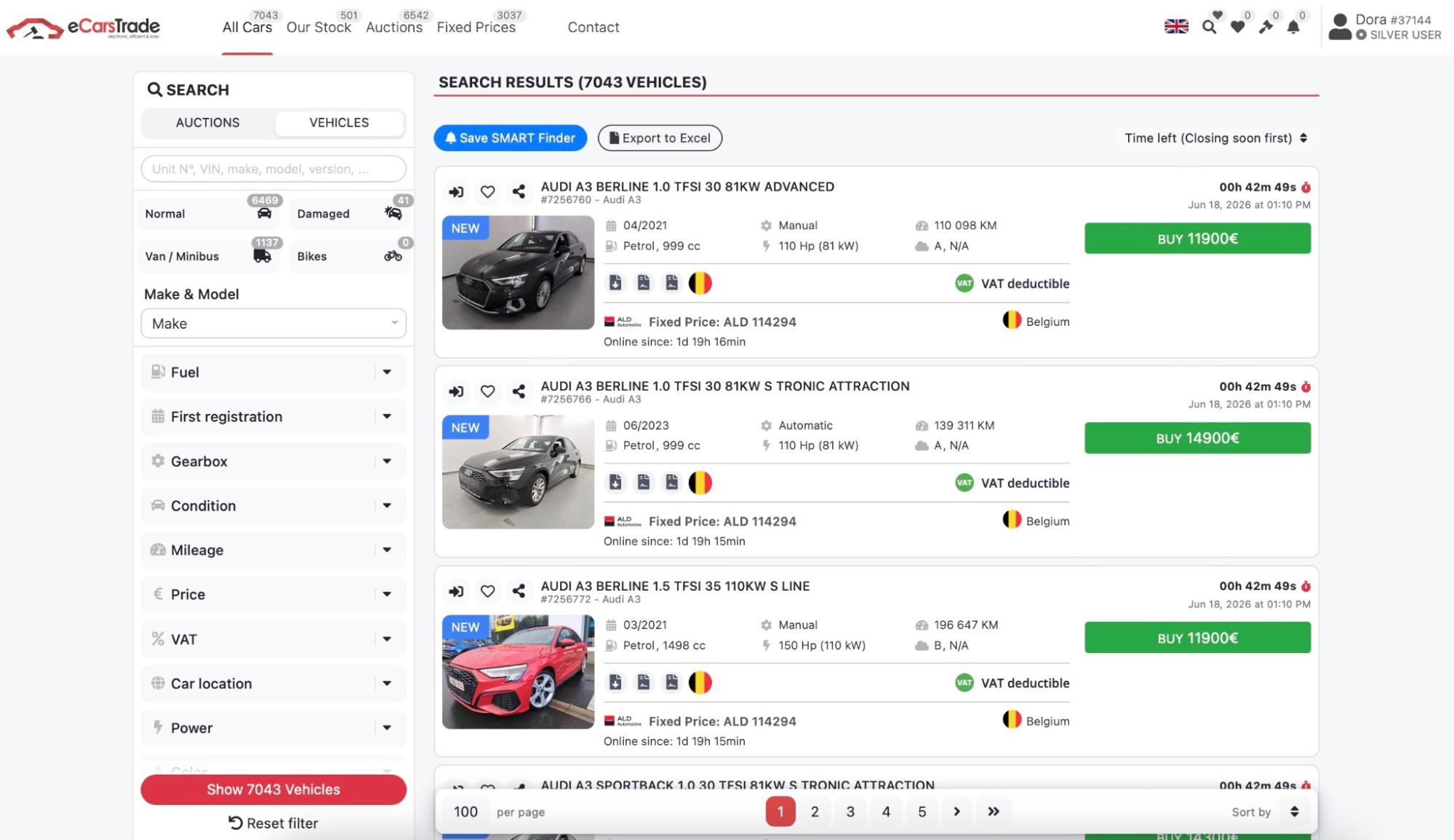
Before you buy, check the vehicle details and the available documents.
Also, this is a good time to estimate the NoVA tax for the car you’re interested in.
That way, you’ll be able to calculate the real import cost before you bid or buy.
When you’re ready to purchase, you can choose between participating in auctions and buying at fixed prices.
Either way, after you’ve bought the car, you’ll receive your vehicle purchase invoice, and then you can start importing.
2. Arrange the transport to Austria
The easiest way to get the vehicle to your dealership in Austria is via the eCarsTrade Delivery Service.
Our service arranges transportation for you and delivers the car to your location, provided it’s accessible by a large car carrier truck.
You could also hire a transport company yourself. In that scenario, the transport company will pick up the car using an official CMR consignment note.
If you’re driving the car yourself, make sure the car has valid temporary transit or company plates.
You’ll also have to buy an Austrian vignette before using motorways or expressways.
3. Prepare the documents
The next step is collecting all the documents related to the car:
- Vehicle purchase invoice
- Original registration papers
- Certificate of Conformity
- Business documents and VAT information
4. Enter the vehicle in the Austrian approval database
Before you can register a car in Austria, it must be entered into the Austrian approval database.
Official Austrian guidance says the general importer enters the data and provides an extract from the approval database.
You can contact the relevant manufacturer (VW, BMW, Audi, etc. ) and make an appointment to enter the vehicle into the approval database.
If the car has the required EU approval documents, they’ll usually be able to prepare the data sheet extract within a few working days.
If the car doesn’t have EU approval or a CoC, contact the technical testing office of the relevant Austrian provincial government.
They’ll review the car data and may request an inspection or additional reports. If everything is accepted, the car can receive individual approval or, in some cases, exemption approval.
Alternatively, you can use a specialized service such as WVTA, which offers support with vehicle approval.
5. Calculate and pay NoVA
You’ll also have to calculate and pay the NoVA before you can register the car.
For businesses, this can be done through FinanzOnline, Austria’s online tax portal.
Once the tax office confirms payment, the vehicle is released in the approval database, allowing registration to continue.
6. Obtain the insurance and register the car
Before registration, you’ll need valid motor third-party liability insurance.
In Austria, you can register the car at authorized registration offices run by insurance companies.
Once your insurance is arranged, the office can process the registration and issue the registration certificate and license plates.

Get to know the Austrian used car market
According to Statistics Austria, demand for used cars is growing, which is good for car dealers.
The number of used-car registrations was 4.2% higher in the first half of 2025 compared to the year before.
The Statistics Austria data also makes it clear that diesel and petrol are still the most popular fuel types.
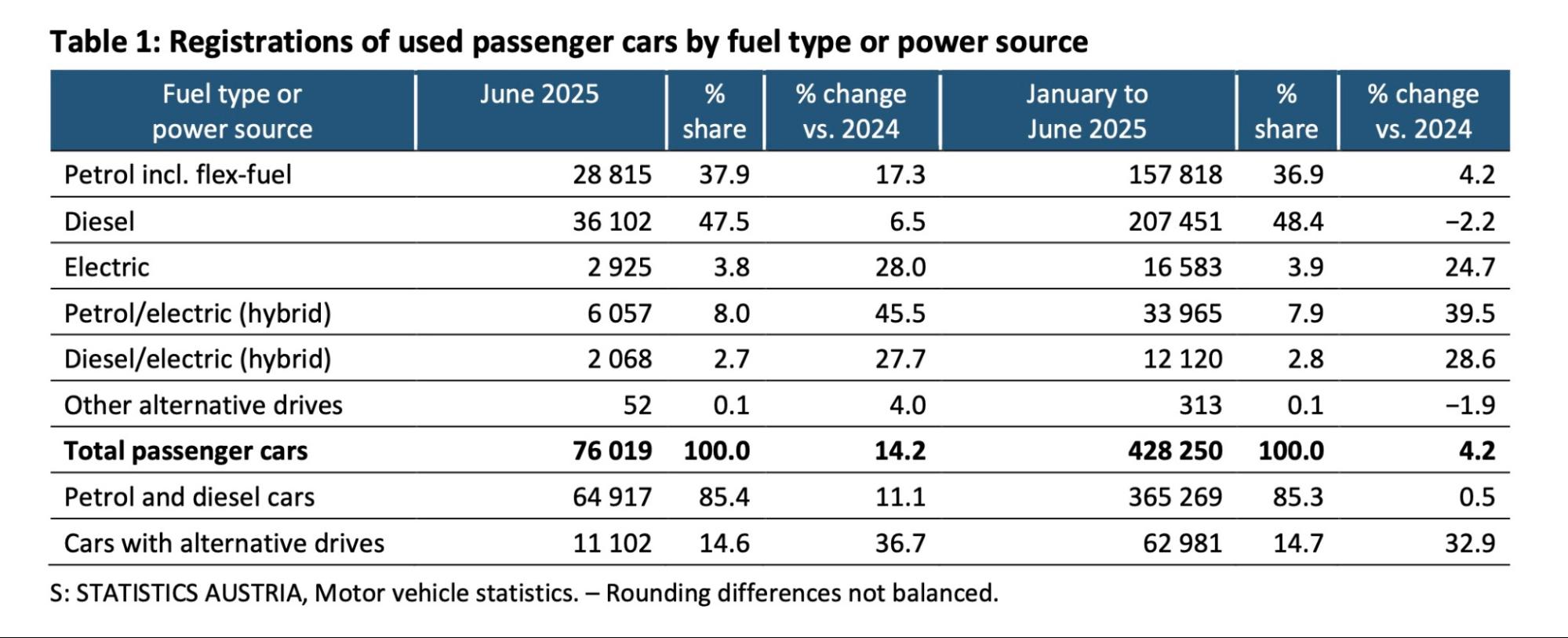
Austrian used cars by fuel type
However, petrol hybrids, diesel hybrids, and EVs all grew in the first half of 2025.
That could be a sign for Austrian dealers to start diversifying their stock.
In addition to registration numbers, average selling time can help dealers choose cars that are easier to resell.
Autovista24 reports that diesel cars spend an average of 59 days on the market, while full EVs take about 85 days.
When it comes to brands, Austrian used-car buyers continue to choose familiar German and VW Group brands.
According to Statistics Austria, the most popular used car brands in the first half of 2025 were VW, BMW, Audi, Mercedes-Benz, and Skoda.
New-car trends can also give you an idea of what may become popular on the used market later.
In 2025, some of Austria’s popular new models included:
- Skoda Octavia
- BMW X1
- Seat Ibiza
- Toyota Yaris / Yaris Cross
- Skoda Karoq
- VW Polo
All things considered, we can say that familiar European brands are a safe choice. But if you’d like to prepare for changing demand, you should consider stocking selected EVs and hybrids.
Importing a car to Austria - FAQ
► Is NoVA always required when importing a car to Austria?
In most cases, yes. If the vehicle is being registered in Austria for the first time, NoVA is required.
► Do I pay customs duty when importing a car from another EU country to Austria?
Usually, no. Customs duty doesn’t apply to imports from other EU countries.
► Do I need a CoC to import a vehicle to Austria?
In most cases, yes, because you’ll need the CoC to register the vehicle in the Austrian approval database. Without the CoC, you may need to apply for individual approval.
► Can you register an imported car before paying NoVA?
Generally, no. The car can only be registered after NoVA is paid and the tax office releases it in the approval database.
► Who enters the car into the Austrian approval database?
For cars with EU type approval, this is usually handled by the brand's general importer in Austria. You can also use a specialized service provider to help with the process.
Importul de vehicule din Europa poate fi un proces complex, dar eCarsTrade este aici pentru a-l simplifica. Aflați cum să: